 Regulations & ComplianceDecoding FD30 and FD60: Understanding the ratings that protect your escape route
Understanding door hardware and fire exit devices in UK buildings
- Regulations & ComplianceDecoding FD30 and FD60: Understanding the ratings that protect your escape route
 Maintenance & RepairsRestore your sticking fire door: five practical adjustments that work
 Regulations & ComplianceCheck Your Fire Door Compliance: 6 Signs You Verify Today
 Installation GuidesMeasuring a Fire Exit Door: Four Checks That Save You a Refit
 Regulations & ComplianceFire exit sign rules: seven things to get right on your escape route
 Fire Exit HardwareUnderstand panic bars: the 3 actions that make emergency exit instant
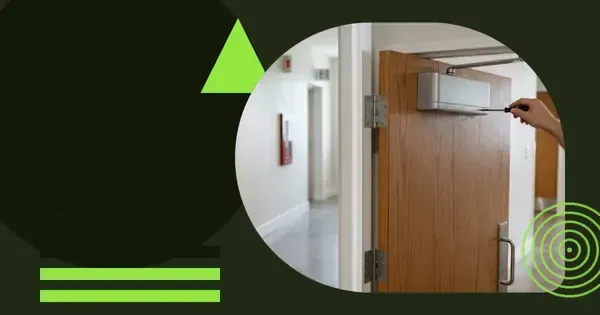 Maintenance & RepairsStop your fire door slamming: 4 adjustments you make today
 Regulations & ComplianceFitting a cat flap in your fire door: why certification matters and the 3 alternatives that work
 Fire Exit HardwareUnderstanding electromagnetic door holders: the 3 settings that govern their release
 Regulations & CompliancePainting your fire door: 3 finishes that keep certification intact
 Fire Exit HardwareUnderstanding drop seals: the 3 places they protect you most
 Hardware SelectionChoosing handles for a fire door: 4 criteria you check first
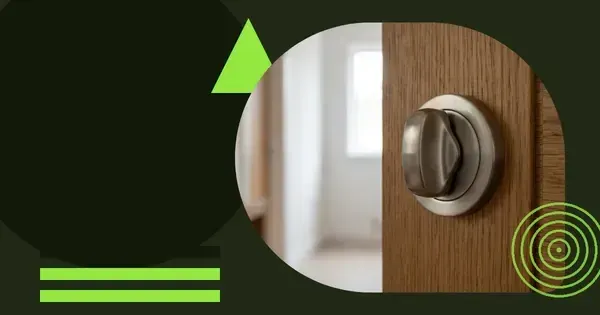 Fire Exit HardwareUnderstanding thumb turn locks: the 3 fire exit features that matter most
 Regulations & ComplianceUnderstanding when your internal doors need fire rating: 4 scenarios that trigger the requirement
Fire Exit Hardware
- Fire Exit HardwareUnderstand panic bars: the 3 actions that make emergency exit instant
- Fire Exit HardwareUnderstanding electromagnetic door holders: the 3 settings that govern their release
- Fire Exit HardwareUnderstanding drop seals: the 3 places they protect you most
- Fire Exit HardwareUnderstanding thumb turn locks: the 3 fire exit features that matter most
Regulations & Compliance
- Regulations & ComplianceDecoding FD30 and FD60: Understanding the ratings that protect your escape route
- Regulations & ComplianceCheck Your Fire Door Compliance: 6 Signs You Verify Today
- Regulations & ComplianceFire exit sign rules: seven things to get right on your escape route
- Regulations & ComplianceFitting a cat flap in your fire door: why certification matters and the 3 alternatives that work
Door hardware and fire exit devices are not what most people think about until something goes wrong. They are the latches, bars, closers, locks and release mechanisms that stand between orderly evacuation and panic, between compliance and liability, between a fire door that works and one that fails. In the UK, these components are governed by standards that treat life safety as non-negotiable, and every building owner, facilities manager and contractor needs to know what those standards demand.
What door hardware and fire exit devices actually do
Door hardware controls how a door opens, closes and secures. Fire exit devices do the same, but under one strict constraint: they must let people out without keys, tools or prior knowledge, even in smoke, darkness or panic. A fire door held open by a wedge, a panic bar that sticks, or a magnetic lock with no fail-safe can each turn a compliant exit into a trap.
The hardware itself divides into three functional groups. Latching mechanisms hold the door closed until someone operates the handle or push bar. Closing devices pull the door shut after each opening, maintaining the fire compartment. Release and escape hardware ensures the door opens under hand pressure alone, without a key.
Each component must match the door's fire rating and the building's occupancy. A 60-minute fire door needs hinges, a latch and a closer that can survive 60 minutes of standard fire exposure. A means-of-escape route needs hardware that operates from the inside without a key, every time.
Check what your doors already carry
Walk your building's exit routes and note what is fitted. Panic bars, thumb-turn cylinders and electromagnetic locks each have different failure modes and maintenance needs. A device with no BS EN marking or a closer that no longer pulls the door tight signals a gap between what is there and what the standards require.
Choosing the right panic hardware for your exit doors
Panic hardware is any device that lets a door open under body pressure, without twisting, lifting or detailed knowledge. UK standards call them panic exit devices when tested to BS EN 1125, and emergency exit devices when tested to BS EN 179. The difference is who will use the door and how much force they can apply.
A panic bar — the horizontal rail across the door — is a BS EN 1125 device. It opens under 15 kg of force applied anywhere along the bar, making it suitable for crowded public buildings where people may press against the door in a surge. An emergency exit device — often a pad or a lever — is tested to BS EN 179 and allows up to 22 kg of operating force, appropriate for workplaces where staff know the exits and occupancy is lower.
Choosing between them depends on the building's use, the number of people who will pass through, and whether they are familiar with the exit. A school, cinema or shopping centre uses panic bars; an office or warehouse may use emergency exit devices. Both must be fitted so the latch releases in a single movement, and both must work without a key from the inside.
Mind the outside access question
Fire exits must open freely from inside, but many need to be secured from outside to prevent unauthorised entry. Outside access devices — key cylinders, card readers, keypads — must not interfere with the inside escape function. A thumb-turn cylinder on the inside, or a mechanical override built into an electronic lock, preserves one-way escape while controlling entry.
Common mistakes that compromise fire exit performance
The most widespread mistake is propping open a fire door. A door held open with a wedge, a hook or a chair cannot close in a fire, and a door that does not close does not stop smoke or flame. Electromagnetic hold-open devices are the compliant alternative: they release the door when the fire alarm sounds or power fails, allowing the closer to do its job.
A second error is replacing one component without checking compatibility. A latch that does not align with a new panic bar, or a closer too weak for the door's weight, leaves the door unreliable. Fire-rated hardware is tested as a set, and mixing parts from different manufacturers or ratings can void the door's certification.
Ignoring maintenance is the third failure. Panic bars seize, closers weaken, and hinges sag. A weekly check of all exit doors — open, close, listen for the latch, test the bar — catches problems before an inspection or an incident does.
- Propped-open fire doors negate compartmentation and allow smoke to travel
- Mismatched hardware components may fail under fire conditions despite individual ratings
- Deferred maintenance turns compliant devices into obstacles
- Locked or bolted exits without proper overrides trap occupants
Fire door closers and their role in compartmentation
A fire door that does not close is not a fire door. Self-closing devices — overhead closers, concealed jamb closers, floor springs — ensure the door returns to its frame and latches after every opening, maintaining the building's fire compartments.
Closers are sized to the door's width, weight and frequency of use. An undersized closer will not pull a heavy door shut; an oversized one will slam it, damaging both the door and the frame. The closer's force is adjustable within limits, but must be set so the door latches reliably without excessive speed.
Where a door serves people with reduced mobility, the closing force must stay within the limits of Approved Document M: a maximum opening force of 30 N from 0° to 30° of swing, rising to 22.5 N thereafter for fire doors. Many closers can meet this while still closing the door, but setting and checking the force is not optional.
Identify which doors need them
Every door on a fire-resisting wall or partition, and every door across a means of escape, must close by itself. Walk corridors, stairwells and cross-passages and note which doors stay open. If a door forms part of the building's fire strategy — and the architect's drawings or the fire risk assessment will say so — it needs a functioning closer.
Electromagnetic locks and fail-safe requirements
Electromagnetic locks hold a door closed using a magnetic bond between an energised coil on the frame and a steel plate on the door. They have no moving parts, no cylinder and no key, but they depend entirely on electrical power. In a fire, that dependency becomes a risk: if the lock does not release, the exit is blocked.
Fail-safe operation is the mandatory response. A fail-safe electromagnetic lock de-energises — and therefore releases — when power is lost, when the fire alarm activates, or when someone presses a break-glass unit beside the door. The circuit must be wired so any of these conditions cuts power to the magnet, and the door must then open freely under hand pressure.
UK guidance in BS 7273-4 describes how to integrate electromagnetic locks with fire alarm systems. The lock must release on every alarm signal, whether from smoke detectors, manual call points or the control panel. A door secured with an electromagnetic lock but without this integration is a locked fire exit, which is prohibited.
Electromagnetic locks work well on high-traffic doors where mechanical latches wear quickly, and where access control is needed from outside. They do not work on doors that must resist fire for a rated period unless the door is also fitted with a mechanical latch that engages when the magnet releases.
Selecting hardware for your building's specific needs
Start with the building's fire risk assessment and the architect's fire strategy, if available. These documents name which doors are fire doors, which walls are fire-resisting, and which routes are designated means of escape. Each of these categories imposes specific hardware requirements.
For each exit door, note the fire rating, the direction of travel, the expected occupancy and whether the door must be secured from outside. A door on a 30-minute fire-rated partition needs 30-minute hardware; a door in a means of escape needs panic or emergency exit hardware; a door on a public route that must also prevent unauthorised entry needs outside access control that does not block inside escape.
Then match components to those requirements. Use only hardware marked with BS EN standards and fire-test evidence. Check that latches, closers, hinges and seals are certified together if the door has a fire rating. Confirm that panic devices meet BS EN 1125 or BS EN 179, and that electromagnetic locks are wired for fail-safe release.
| Door type | Essential hardware | Common additions |
|---|---|---|
| Fire door, internal corridor | Fire-rated latch, closer, hinges, intumescent seals | Hold-open device if high traffic |
| Final exit, public building | BS EN 1125 panic bar, closer, weather seals | Outside access cylinder, alarm on opening |
| Final exit, workplace | BS EN 179 emergency device, closer | Keypad or card reader outside |
| Fire exit, access-controlled area | Panic hardware, fail-safe electromagnetic lock, break-glass release | Integration with fire alarm and access system |
Think about who will maintain it
Hardware that is difficult to service gets neglected. Concealed closers are elegant but require specialist tools; surface-mounted closers are visible but easy to adjust. Electromagnetic locks need electrical maintenance; mechanical panic bars need lubrication and alignment checks. Choose hardware that your facilities team can inspect and adjust, or budget for contractor visits.
Where to learn more and where to go next
Door hardware and fire exit devices are not static topics. Standards evolve, products change, and every building is different. Staying current means consulting the documents that govern UK installations: BS 9999 for fire safety in buildings, BS 7273-4 for electromagnetic release systems, BS EN 1125 and BS EN 179 for panic and emergency exit hardware, and Approved Document B for England, with equivalents in Scotland, Wales and Northern Ireland.
Trade bodies such as the Door and Hardware Federation publish guidance on product selection and installation, and manufacturers provide technical data sheets and compatibility charts. The Building Safety Regulator and the Fire Protection Association offer resources on compliance and risk assessment.
For any building where people sleep, gather or work, a competent fire risk assessor can identify which doors must meet which standards and whether current hardware complies. Where it does not, an architectural ironmonger or fire door specialist can specify replacement components that satisfy both escape and compartmentation requirements.
Get started this week
You do not need a full audit to begin. Small, immediate actions build a safer building and surface problems before they become incidents.
Walk every exit route and open every fire door in your building. Check whether each door closes fully and latches without being pushed. Test panic bars by pressing the centre and both ends. Look for wedges, hooks or chairs holding doors open, and remove them or replace them with wired hold-open devices. Note any door that is stiff, that drags on the floor, or that has visible gaps around the frame. Make a list of what needs attention, and pass it to whoever is responsible for maintenance. Schedule a weekly door check — five minutes per floor — and make it routine.
Frequently asked questions
What is a time-out in the context of door hardware?
In door hardware, a time-out refers to a delay feature in electromagnetic locks or access control systems where the lock remains open for a set period after being released, allowing someone to pass through without needing to trigger the release again immediately.
How does blocking software relate to fire exit systems?
Blocking software is not directly related to fire exit hardware. The term is used in digital access control and network security. Fire exit systems rely on physical devices such as panic bars, closers and electromagnetic locks with fail-safe release, not software-based blocking.
What does self-exclusion mean when applied to door access?
Self-exclusion in door access typically refers to features in card-based or biometric systems where an individual's credentials can be revoked or suspended, preventing them from entering certain areas. It is distinct from fire exit hardware, which must allow egress without credentials.
How do you set a deposit limit on a fire door closer?
There is no deposit limit on a fire door closer. The term deposit limit is unrelated to door hardware. Fire door closers are adjusted for closing speed and latching force using adjustment screws, typically marked on the closer body, to meet building regulations and accessibility standards.
What warning signs indicate a fire exit device needs replacement?
A panic bar or emergency exit device should be replaced if it requires excessive force to operate, if the latch does not release when the bar is pressed, if there is visible corrosion or damage, if parts are loose or missing, or if it lacks a BS EN 1125 or BS EN 179 marking showing it was tested to UK standards.
Can you talk to someone about fire door compliance issues?
Yes. A qualified fire risk assessor, a fire door inspector certified to a scheme such as BM TRADA or Warrington, or an architectural ironmonger can assess whether your doors and hardware meet UK fire safety standards and advise on upgrades or repairs.
Where do you get help with choosing panic hardware today?
Speak to an architectural ironmonger, a fire safety consultant or the technical team at a hardware manufacturer. The Door and Hardware Federation also publishes selection guides, and your building control officer can confirm which standards apply to your specific building type and occupancy.