Understanding drop seals: the 3 places they protect you most
 Save
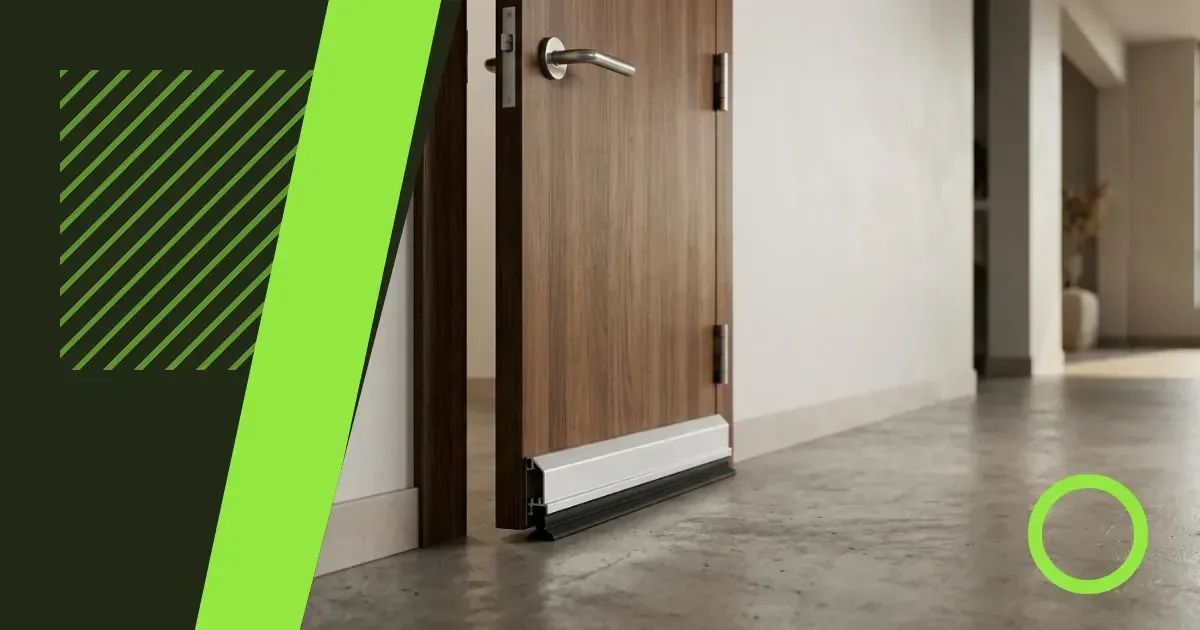
A drop seal is a retractable barrier fitted to the bottom of a door that lowers automatically when the door closes. It seals the gap between the door and the floor, preventing smoke, sound and draughts from passing underneath. Drop seals are essential on fire doors, acoustic partitions and anywhere tight environmental control matters. Fred Duncombe explains how they work, where regulations require them and how to choose the right type for your building.
How a drop seal operates
The seal sits in a housing along the bottom edge of the door. When the door swings open, a plunger or trigger mechanism lifts the seal clear of the floor. As the door closes, the plunger retracts and the seal drops into place, pressing against the threshold or floor surface. This automatic action requires no user input and creates a continuous barrier the moment the door reaches its closed position.
Most drop seals use a spring-loaded mechanism or gravity to deploy the seal. The seal itself is typically a rubber or brush blade long enough to span the door width and deep enough to cover the gap fully. High-quality units allow height adjustment so the seal makes firm contact without dragging during operation.
Identify the three main applications
Drop seals serve different purposes depending on the door's role. Recognising which function matters most helps you choose the correct specification and ensures compliance with the relevant standard.
Fire and smoke containment
On fire doors, the drop seal completes the perimeter protection provided by intumescent strips on the frame. Smoke rises, but it also travels under doors when pressure differentials exist. A properly fitted smoke seal keeps corridors and stairwells clear during evacuation, giving occupants time to escape and firefighters a safer route in. Building regulations mandate smoke seals on fire doors separating circulation routes from accommodation or risk areas.
Acoustic control
Sound leaks through even narrow gaps. Recording studios, meeting rooms, cinemas and residential units near noisy plant rooms rely on acoustic drop seals to meet sound-transmission requirements. These seals compress more firmly than smoke variants and often use denser rubber profiles. The threshold beneath the door must be level and smooth; any irregularity undermines the seal's effectiveness.
Thermal and draught exclusion
External doors and doors separating heated spaces from unheated areas benefit from drop seals that reduce heat loss and prevent cold air infiltration. Whilst not life-safety devices, they improve energy efficiency and occupant comfort. Combination seals that address both smoke and thermal performance are common in mixed-use buildings.
Match the seal type to your door construction
Drop seals come in surface-mounted and concealed variants. Surface-mounted units fix to the door face and are visible when the door is open. They suit retrofits and solid-core doors where routing a recess is impractical. Concealed drop seals sit within a groove machined into the door's bottom rail, leaving only a narrow slot visible. This cleaner appearance suits new installations and high-specification interiors, but the door must be thick enough to accommodate the housing without weakening the structure.
Fire-door drop seals carry certification to match the door's rating. An FD30 door requires a seal tested to maintain integrity and smoke control for thirty minutes. Using an uncertified seal voids the door's fire rating and breaches building control. Always check the product datasheet confirms compatibility with your door type and rating.
Follow these steps to fit a drop seal correctly
Fitting a drop seal requires precision. A seal that drags reduces the door's swing speed and wears prematurely; one that sits too high fails to block smoke or sound. Work methodically and test the operation before final fixing.
- Measure the door width and order a seal at least as wide as the door, trimming the housing to fit if necessary.
- Mark the position on the door's bottom edge, ensuring the seal will contact the floor or threshold evenly across its length when deployed.
- For concealed seals, rout the housing groove to the depth and width the manufacturer specifies, keeping the cut square and free of splinters.
- Fix the seal housing with screws at the recommended centres, checking the trigger mechanism aligns with the door frame or jamb.
- Close the door slowly and observe the seal drop; adjust the trigger position or seal height until the blade makes firm, even contact without binding.
- Cycle the door several times, listening for scraping sounds and checking the seal retracts fully when the door opens.
Recognise when adjustment or replacement is due
Drop seals endure thousands of cycles. The blade wears from friction, the spring weakens and dirt accumulates in the housing. Inspect seals during routine fire-door checks—typically every six months in commercial premises. A blade that no longer touches the floor, a mechanism that sticks or a housing coming loose signals the need for action.
Replacement blades are available for many models, avoiding the cost and disruption of replacing the entire assembly. Clean the housing before fitting the new blade and lubricate moving parts sparingly with a dry PTFE spray. Oil-based lubricants attract dust and gum up the mechanism. If the housing itself is damaged or the door has been cut down, the whole unit must be replaced to maintain the door's certification.
Compare drop seals with other threshold options
| Solution | Operation | Best for | Limitation |
|---|---|---|---|
| Drop seal | Automatic on closing | Fire doors, heavy use | Requires smooth floor |
| Fixed brush strip | Permanent contact | Draught exclusion | Not smoke-rated |
| Rising butt hinge | Lifts door on opening | Low thresholds, accessibility | Limited sealing |
| Threshold strip | Static profile on floor | Weather sealing | Trip hazard, not automatic |
Understand the regulatory context
Building regulations in England and Wales require smoke seals on fire doors protecting means of escape. Approved Document B sets out where fire doors are needed; where a door has a thirty-minute or sixty-minute rating, it must prevent smoke leakage around its perimeter, including the bottom edge. The drop seal forms part of that assembly and must be maintained in working order throughout the building's life.
Planning a new build or refurbishment? Discuss threshold details with your building control officer early. Accessibility requirements may limit the height of any threshold ramp beneath the door, and not all drop seals accommodate very tight clearances. Coordinating the floor finish, door specification and seal type avoids late changes and ensures the installation meets all applicable standards.
Maintain drop seals as part of your fire-door routine
A fire door is an assembly, not just a leaf. The seals, hinges, closer and latch all contribute to its performance. During inspections, open and close the door whilst watching the drop seal deploy. The blade should descend smoothly and make continuous contact. Wipe the blade and housing clean, removing grit and debris that could jam the mechanism. Check the screws holding the housing remain tight; vibration from door operation can loosen fixings over time.
Record each inspection in your building's fire-safety log. Note any repairs or adjustments made and schedule the next check. Consistent maintenance protects occupants, satisfies your legal duties and extends the life of the door assembly. For guidance on other fire-door components, see choosing handles for a fire door and understanding thumb turn locks.
Download PDF: Drop seal installation and maintenance checklist PDF, 29 KB
Further reading
Frequently asked questions
What is the difference between a drop seal and an intumescent strip?
A drop seal is a mechanical device that lowers to block the gap under a closed door, preventing smoke and sound from passing through. An intumescent strip is a passive fire-protection material fitted around the door frame that expands when exposed to heat, sealing the gaps between the door edge and the frame. Both are needed on a fire door to complete the perimeter seal.
How do I know if my drop seal needs replacing?
Check whether the seal blade still makes firm contact with the floor when the door is closed, retracts fully when the door opens and operates smoothly without sticking. Visible wear, a loose housing or a mechanism that no longer deploys automatically are all signs that replacement is due. Inspect the seal every six months as part of your fire-door maintenance routine.
Can I fit a drop seal to an existing fire door?
Yes, provided you choose a seal certified for the door's fire rating and install it according to the manufacturer's instructions. Surface-mounted drop seals are straightforward to retrofit. Concealed seals require routing a groove in the door's bottom rail, which must be done carefully to avoid weakening the door or voiding its certification. Always check compatibility before purchasing.