Understanding thumb turn locks: the 3 fire exit features that matter most
 Save
A thumb turn lock is a keyless mechanism fitted to fire exits and emergency doors that allows anyone to leave a building instantly by rotating a small lever with their thumb. It eliminates the need to search for keys during an evacuation. This guide explains how thumb turn locks work, where regulations require them, and how to choose the right hardware for Fred Duncombe fire exit installations across the UK.
How thumb turn mechanisms operate
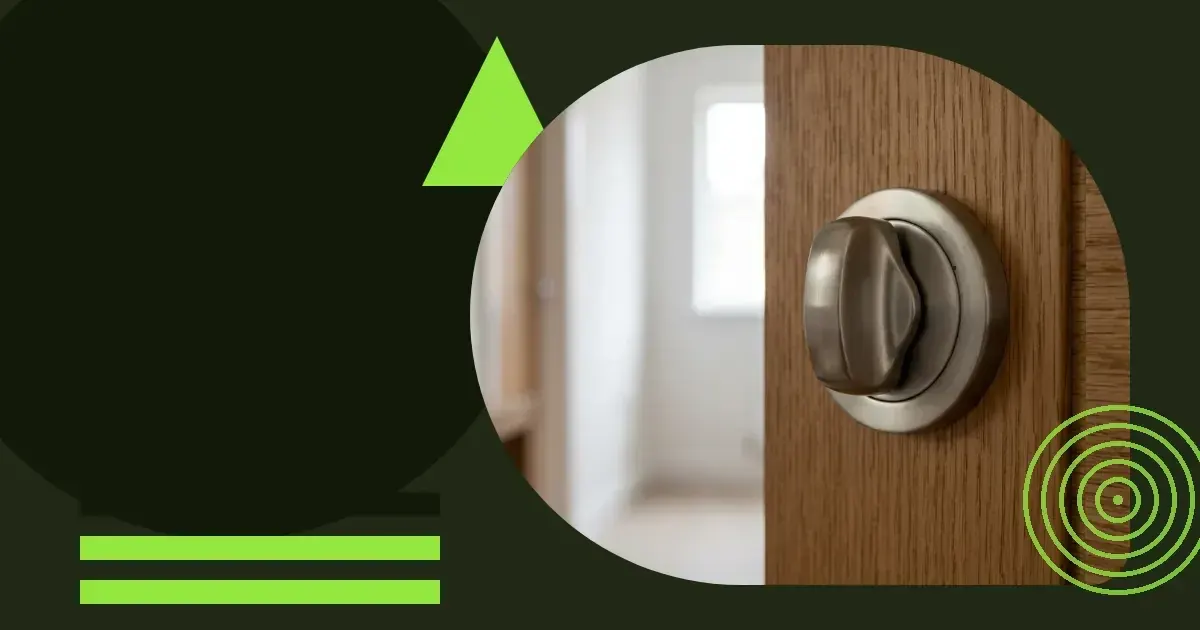
The thumb turn sits on the inside face of a door, replacing the keyhole you would find on a standard cylinder lock. Turn it ninety degrees in either direction and the bolt retracts, allowing the door to open. On the outside, a keyed cylinder remains in place so authorised personnel can enter when the building is locked.
This split operation serves two purposes. Occupants leave without delay or confusion. Staff and emergency services gain entry from outside using their key. The thumb turn portion requires no grip strength and works even when hands are full or injured.
Single versus double cylinder locks
A single cylinder lock has a keyhole on one side and a thumb turn on the other. A double cylinder lock requires a key on both sides. Fire exits must use single cylinder locks with the thumb turn on the inside so that escape remains possible at all times, regardless of who holds the key.
When building regulations require thumb turn hardware
Any door designated as a fire exit in England and Wales must allow occupants to leave without using a key, searching for a release mechanism or understanding instructions. Approved Document B of the Building Regulations sets this requirement for most non-domestic premises and for blocks of flats where shared escape routes exist.
The same principle applies to doors leading from flats onto communal corridors and staircases. Residents must be able to leave their home and reach the final exit without keys. A thumb turn lock satisfies this rule, as does panic hardware such as a crash bar on higher-traffic routes.
Residential properties with simpler layouts
Single-family homes do not always need thumb turn locks on external doors, provided every occupant can reach an exit that opens from the inside without a key. Many households fit them regardless because they simplify evacuation and suit doors that remain locked during the day.
Choosing compatible cylinder lengths and finishes
Thumb turn cylinders come in standard lengths measured from the face of the door to the centre of the cam. Measure your door thickness, add the depth of any surface-mounted furniture, then select a cylinder that positions the thumb turn flush with or slightly proud of the escutcheon. Cylinders that protrude too far snag clothing; those set too deep become awkward to grip.
Match the finish to your other door furniture. Polished brass, satin chrome and black are widely available. Check that the cylinder carries British Standard BS EN 1303 or the newer BS EN 15684 mark, which confirms it meets durability and security tests.
Installing your thumb turn lock: 6 practical steps
- Remove the existing cylinder by loosening the retaining screw on the edge of the door and withdrawing the old barrel.
- Measure the door thickness and select a replacement cylinder of the correct overall length, ensuring the cam aligns with your latch mechanism.
- Insert the new thumb turn cylinder from the outside, checking that the cam sits vertically when the thumb turn faces upward on the inside.
- Tighten the retaining screw on the door edge until the cylinder is firm but still turns smoothly.
- Test the action by rotating the thumb turn through its full range and confirming the bolt retracts completely.
- Check that the door latches securely when closed and that the key operates the cylinder from outside without binding.
Thumb turn locks compared to other emergency exit hardware
| Hardware type | Operation | Typical use | Key advantage |
|---|---|---|---|
| Thumb turn lock | Rotate lever with thumb | Low-traffic fire exits | Simple, compact, fits standard door prep |
| Panic bar (crash bar) | Push horizontal bar | High-traffic exits, public buildings | Entire body can activate; highly visible |
| Emergency exit latch | Turn handle or push pad | Medium-traffic escape routes | Familiar action; integrates with closer |
| Magnetic hold-open with release | Automatic on alarm | Fire doors held open for access | Maintains compartmentation when needed |
Maintaining reliable operation over time
Thumb turn mechanisms gather dust and suffer wear on the cam that connects to your latch. Every six months, withdraw the cylinder and clean the moving parts with a dry brush. Apply a small amount of graphite powder to the keyway and the thumb turn pivot, avoiding oil-based lubricants that attract dirt.
Test the action monthly by operating the thumb turn from a closed position and confirming the bolt moves smoothly. If resistance increases or the mechanism sticks, inspect the cam for burrs and check that the retaining screw remains tight. A door that has dropped on its hinges can misalign the cylinder with the keep, forcing the cam to bind.
Recognising when replacement is due
Replace the cylinder if the thumb turn becomes loose on its spindle, if the key no longer turns without force, or if visible cracks appear in the body. Fire exit hardware must function under stress, and a worn cylinder may jam at the moment it is needed most. Replacement takes minutes and costs far less than the consequence of a failed escape route.
Pairing thumb turn locks with certified fire doors
A thumb turn lock works only as well as the door it secures. Fire exits rated FD30 or FD60 require cylinders and keeps that do not compromise the door's fire resistance. Look for hardware tested as part of a complete door assembly, and ensure that any modification to fit the lock does not remove intumescent material or enlarge the cylinder hole beyond the size tested. You may find guidance on when fire ratings apply to internal doors in our article on fire door requirements for different property types.
Fit intumescent pads around the cylinder if the manufacturer specifies them. These swell when exposed to heat, sealing the lock cavity and preserving the door's integrity during a fire. Certification labels on the door edge list compatible hardware; consult them before selecting a replacement cylinder.
Common mistakes that reduce safety
Fitting a double cylinder lock on a fire exit forces occupants to locate a key before they can leave. This breaches regulations and creates a real risk during panic. Even when a key hangs nearby, people under stress overlook it or knock it to the floor.
Another error is installing a thumb turn that requires excessive force or a two-stage action. The mechanism should operate with light thumb pressure and a single motion. Anything more complex increases the chance that someone unfamiliar with the building will struggle to escape.
Finally, avoid placing thumb turn locks on doors that open outward into public spaces where tampering becomes easy. Externally beaded doors and exposed cylinders invite forced entry. If your fire exit must open outward, consider anti-drill cylinders and surface-mounted escutcheons that limit access to the cam.
Download PDF: Fire exit thumb turn lock inspection checklist PDF, 28 KB
Further reading
Frequently asked questions
What is a thumb turn on a fire door lock?
A thumb turn is a small lever on the inside of a fire exit lock that you rotate with your thumb to retract the bolt and open the door, eliminating the need for a key during evacuation.
Do all fire exits need thumb turn locks?
Fire exits must allow occupants to leave without a key, which a thumb turn lock achieves. Panic bars and emergency exit latches are alternatives for higher-traffic routes, but the keyless principle applies to all designated escape doors.
Can you fit a thumb turn lock to any door?
Thumb turn cylinders fit most doors prepared for a euro-profile cylinder. Measure your door thickness and select a cylinder of the correct length. Fire-rated doors require hardware tested as part of the complete assembly.