Understanding electromagnetic door holders: the 3 settings that govern their release
 Save
An electromagnetic door holder is a device that keeps a fire door open during normal use whilst releasing it automatically when the fire alarm activates. It combines everyday convenience with the legal requirement that fire doors close when needed. Fred Duncombe explains how these devices balance access and safety, where regulations require them, and what you check before installing one.
How an electromagnetic holder works on a fire door
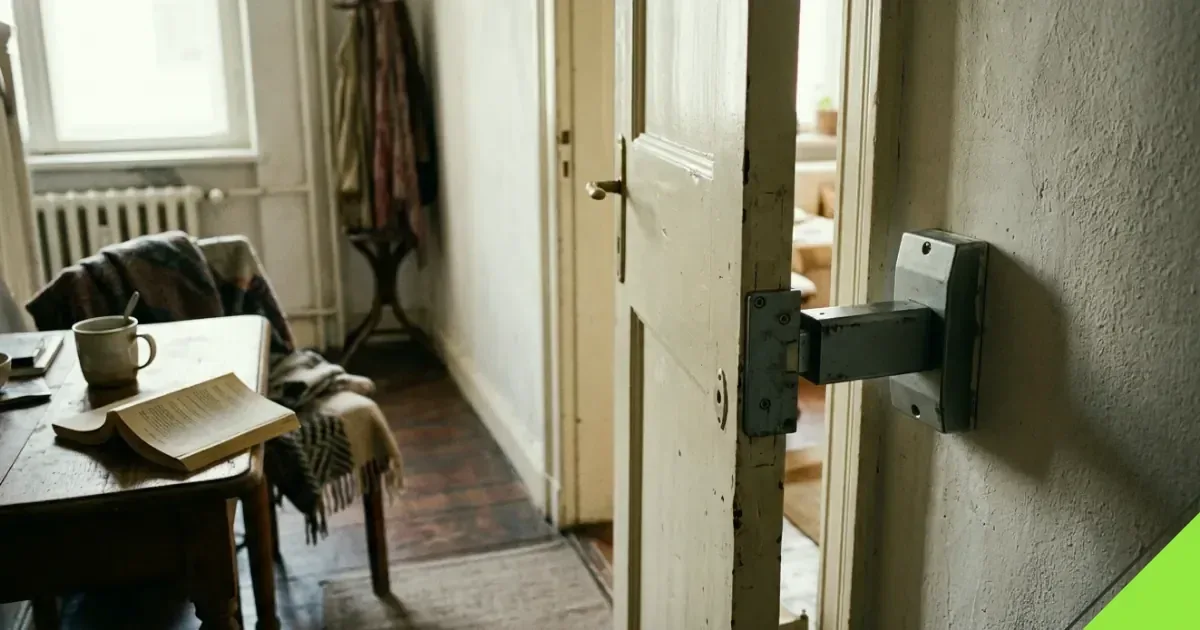
The holder consists of two parts: a wall-mounted electromagnet and a steel plate fixed to the door. When energised, the magnet creates a pull strong enough to hold the door open against the force of its closer. The device sits hardwired into the building's fire alarm system.
When the alarm sounds, power to the magnet is cut. The magnetic field collapses instantly, and the door closer pulls the door shut. The action takes seconds. No battery backup exists by design—loss of power equals door release, which is the fail-safe state.
The system depends on three elements functioning together: a working fire alarm panel, a correctly adjusted door closer, and an electromagnet rated for the door's weight. Remove any one and the door either stays permanently open or cannot be held at all.
Choose between wall-mounted and floor-mounted units
Wall-mounted holders fix to the wall behind the door and pair with a steel plate on the door's face. They suit standard swing doors in corridors and offices. Floor-mounted versions sit beneath the door and engage with a plate on the bottom edge, used where wall fixing is impractical or where aesthetic concerns rule out visible hardware.
Both types release identically when triggered. Your choice depends on the door's construction, the fixing surface available, and whether the holder will be visible during use.
Recognise the three locations where these devices are required
Electromagnetic holders appear wherever building regulations demand self-closing fire doors but daily traffic makes a constantly closing door impractical. The requirement balances compartmentation with usability.
- Corridors serving multiple rooms, where propped-open fire doors would breach compartmentation but staff or residents move through frequently.
- Doors between different fire zones in a building, such as between a main hall and a side corridor, where the door must close to contain smoke yet remain open during events or working hours.
- Accessible routes where a heavy fire door would obstruct wheelchair users or others with limited strength, but the door still needs to close in an emergency.
The holder is never a substitute for a working door closer. The closer provides the closing force; the holder simply restrains it until the alarm releases the door. A door held open by an electromagnet but lacking a functioning closer will stay open even after the magnet drops power.
Install the holder at the correct height and distance
The magnet fixes to the wall at a height that aligns with a comfortable position on the door when open. Most installations place the unit between one and one-point-five metres from the floor, though accessibility considerations may shift this lower.
The steel plate on the door sits directly opposite the magnet when the door reaches its hold-open position. That position is typically between seventy and ninety degrees, wide enough to allow passage but not so wide that the door obstructs an adjacent wall or corridor. The plate must align precisely with the magnet face—offset by even a centimetre and holding force drops sharply.
Wiring runs back to the fire alarm panel through conduit or trunking. The cable carries low-voltage direct current, and the circuit is monitored by the panel so that a wiring fault triggers a fault indication. A qualified electrician completes the connection; this is not work for general trade installation.
Check the holding force matches the door weight
Electromagnets are rated by holding force, typically given in newtons or kilograms. A standard office fire door weighing thirty to forty kilograms requires a holder rated to at least fifty kilograms to overcome the closer's resistance and any slight misalignment.
Heavier doors—solid timber, steel-faced or oversized—demand correspondingly stronger magnets. Under-specifying the holder results in the door pulling free during use, particularly if someone brushes past or if air pressure changes in the building.
Wire the device into your fire alarm system correctly
The holder connects to a dedicated output on the fire alarm panel, labelled variously as a sounder circuit, auxiliary relay or door-holder circuit depending on the panel manufacturer. When the panel enters alarm state, this output de-energises, cutting power to every holder on the circuit.
Multiple holders can share one circuit provided the total current draw stays within the panel's output rating. Each holder draws modest current—often under half an ampere—but a building with ten or twenty held-open doors can approach the limit. The installer calculates the load and may split holders across several outputs if needed.
Some panels offer a test function that simulates an alarm without sounding the main alarm devices. This allows you to verify that all holders release as expected during commissioning or periodic testing. Understanding drop seals adds another layer of protection by sealing the gap beneath the door once it closes.
Maintain the holder and test it at required intervals
Monthly testing forms part of the building's fire safety routine. Press the test button on the alarm panel or activate a call point, then walk the building to confirm every held door has released and closed fully. A door that stays open indicates either a holder fault, a wiring issue, or a closer that has lost tension.
Annual maintenance by a competent person covers the holder itself: checking the magnet face for debris, verifying the steel plate remains secure, inspecting cable connections, and measuring holding force with a spring balance. Dirt or paint on the magnet face reduces contact and weakens the hold; clean surfaces with a dry cloth, never lubricant.
| Component | What you check | Frequency |
|---|---|---|
| Electromagnetic holder | Releases on alarm, magnet face clean, plate aligned | Monthly test, annual inspection |
| Door closer | Door closes fully and latches after release | Monthly test, adjustment as needed |
| Wiring and connections | No loose terminals, cable intact, no fault indication on panel | Annual inspection |
If a holder fails to release, remove power immediately and prop the door open manually only if the fire alarm system confirms no active alarm. Replace the faulty unit before restoring the hold-open function. Choosing handles for a fire door ensures the rest of the hardware complements the holder's function.
Avoid common installation mistakes that compromise safety
The most frequent error is installing a holder without first confirming the door has a working closer. A held-open door with no closer becomes a permanently open door the moment the alarm sounds and the magnet releases, defeating the entire purpose of the fire door.
Misalignment between magnet and plate is the second common fault. A gap of more than two millimetres reduces holding force unpredictably. Doors that sag on their hinges over time pull the plate out of alignment; rehang the door or shim the hinges before expecting the holder to perform.
Wiring the holder to an unswitched power supply rather than to the fire alarm panel creates a door that never releases. The holder must lose power during an alarm—connecting it to a permanent live defeats the fail-safe principle and breaches regulations.
Never bypass a holder that has stopped working
Propping a fire door open with a wedge, hook or any other manual means bypasses the automatic release and leaves the building unprotected. If a holder fails, the correct action is to let the door close under its own closer until the holder is repaired or replaced. Temporary inconvenience does not justify leaving a fire door wedged.
Some occupants tape over the latch or adjust the closer to reduce closing force, thinking this makes passage easier. Both actions compromise the door's ability to close properly in a fire and may void the door's certification. Painting your fire door reminds you that certification depends on every component working as intended.
Compare electromagnetic holders with other hold-open methods
Three methods exist to hold a fire door open: electromagnetic holders, free-swing closers with hold-open positions, and acoustic release devices. Each suits different scenarios.
| Method | Release trigger | Best suited to |
|---|---|---|
| Electromagnetic holder | Fire alarm activation | Busy corridors, accessible routes, doors between fire zones |
| Free-swing closer | Manual release by pushing door past hold-open point | Low-traffic areas where automatic release is not required |
| Acoustic release | Sound of fire alarm sounder | Buildings without a wired fire alarm system or retrofit situations |
Electromagnetic holders offer the most reliable release because they depend on a wired connection to the alarm panel. Acoustic devices listen for the alarm tone but can be confused by other loud noises or may fail to hear a distant sounder. Free-swing closers require someone to manually release the door, which cannot be guaranteed in an emergency.
Know when regulations permit a held-open fire door
Building regulations and fire risk assessments determine whether a fire door may be held open and, if so, by what means. A door forming part of a protected escape route generally must remain closed unless an automatic release device is fitted.
The responsible person—the building owner, landlord or facilities manager—commissions a fire risk assessment that identifies which doors may be held open and which must stay closed. The assessment considers the number of occupants, their familiarity with the building, the presence of vulnerable people, and the layout of escape routes.
Where the assessment permits hold-open, it will specify that the device must be linked to the fire alarm system. Manual hold-open—wedges, hooks, chairs—is not acceptable and constitutes a breach that can result in enforcement action by the fire authority. Understanding thumb turn locks addresses another aspect of fire exit hardware that balances security with emergency egress.
Download PDF: Electromagnetic Door Holder Installation and Maintenance Checklist PDF, 28 KB
Further reading
Frequently asked questions
What happens to an electromagnetic door holder when the power fails?
The holder releases immediately and the door closer pulls the door shut. Loss of power is the fail-safe state, so a power cut triggers the same response as a fire alarm.
Can you fit an electromagnetic holder to any fire door?
Only if the door already has a working closer and the building's fire risk assessment permits the door to be held open. The holder also requires connection to the fire alarm system by a qualified electrician.
How often should you test an electromagnetic door holder?
Monthly, as part of the fire alarm test. Activate the alarm and walk the building to confirm every held door has released and closed fully. Annual inspection by a competent person covers the holder's condition and holding force.