Fitting a cat flap in your fire door: why certification matters and the 3 alternatives that work
 Save
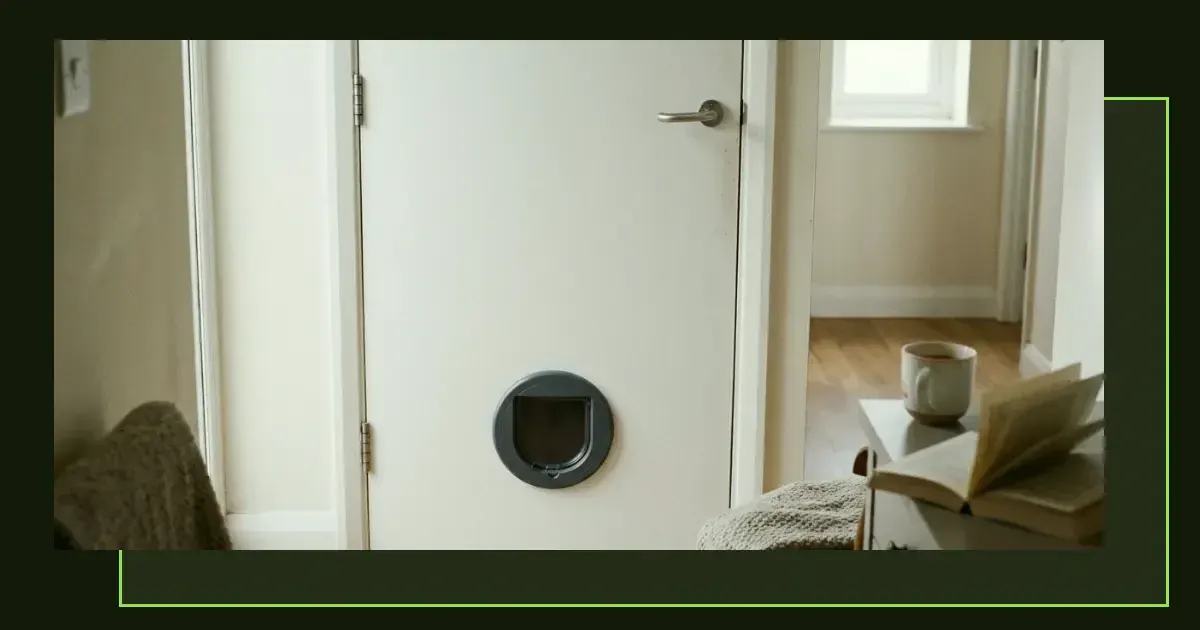
No, you cannot fit a cat flap in a fire door without voiding its fire certification. Any modification that cuts through the door's core—whether for a pet door, additional glazing or altered hardware—destroys the tested integrity that earned the door its rating. Fred Duncombe explains what happens when you alter a fire door, why certification protects you in ways standard doors cannot, and which solutions let you keep both fire safety and pet access intact.
Understanding why fire doors cannot be modified
A fire door earns its rating—FD30 or FD60—through laboratory testing of the complete assembly: the leaf, frame, hinges, seals and hardware fitted exactly as submitted. Cutting an opening for a cat flap removes material that was essential to the door's performance under heat and flame. The intumescent strips along the edges, designed to expand and seal gaps during a fire, lose their effectiveness when the door's structure is compromised.
Even a small aperture changes how heat travels through the door. Fire resistance depends on the door remaining whole, with every layer—face veneer, core material, lipping—working together. Once you breach that assembly, the door can no longer be certified to hold back fire for its stated period. In a domestic setting, that period is the time occupants need to escape and emergency services need to arrive.
Recognising what certification actually protects
Fire door certification is not a formality. It confirms that the door, when closed, will contain smoke and flame long enough for people in other rooms or floors to reach an exit. Building Regulations in the UK require fire doors in certain locations—between a garage and a house, separating floors in a loft conversion, and in flats—to create compartmentation that slows a fire's spread.
When you fit a cat flap, you remove that protection. The hole allows smoke to pass through immediately, and under heat the plastic or metal flap itself will melt or warp, leaving an open gap. Insurers and local authorities treat a modified fire door as a standard door, which means you may be in breach of building control approval and your insurance cover may not respond as expected after a fire.
What happens during a fire
A certified fire door, properly maintained and closed, can withstand direct flame exposure for thirty or sixty minutes. During that time the intumescent strip expands to seal the gap between door and frame, the core resists heat transfer, and smoke seals prevent combustion gases from escaping. A cat flap punctures this system. The opening acts as a vent, drawing smoke and hot gases through even before the flap fails, and the loss of core material weakens the surrounding structure under load.
Exploring alternatives that preserve fire safety
You have three practical ways to give your pet access without compromising a fire door. Each keeps the door intact and maintains the rating it was tested to achieve.
Installing a cat flap in an adjacent wall
Where the fire door separates two rooms, consider fitting the cat flap into the wall beside the door frame instead. This approach leaves the door assembly untouched. The wall itself—if it is not a fire-rated partition—can be cut and lined with a standard pet door. Your cat gains access, the fire door remains certified, and you avoid any conflict with Building Regulations. Check that the wall in question is not load-bearing or part of a protected escape route before you begin work.
Replacing the fire door with a standard door
If the fire door was fitted for reasons other than regulatory requirement—perhaps as a precaution or at a previous owner's request—you may be able to replace it with a standard internal door and fit the cat flap there. This option applies only when Building Regulations do not mandate a fire door in that location. You will need to confirm with your local building control officer or a qualified surveyor whether the door serves a statutory purpose. Where it does not, a standard door with a pet entrance is a straightforward solution.
Keeping the fire door and using a manual routine
Some households choose to leave the fire door on a hold-open device during waking hours and close it at night or when the home is empty. An electromagnetic holder, wired to the smoke alarm system, releases the door automatically when smoke is detected, ensuring the door closes when it is needed most. Your pet moves freely whilst the house is occupied, and the fire door provides protection during higher-risk periods. This method requires that someone is present to manage the door's position and that the hold-open device is installed and maintained correctly. Read more about how electromagnetic holders release under alarm to understand the wiring and settings involved.
Checking whether your door must remain a fire door
Not every internal door requires a fire rating. The obligation arises in specific situations: new loft conversions where the loft forms a habitable room, the door between an integral garage and the house, flats and houses in multiple occupation, and any location where building control has issued a notice requiring compartmentation. If you are uncertain whether your door falls into one of these categories, consult the original building control approval for your property or speak to your local authority's building control team.
Where the door is not required by regulation, you may replace it with a standard door and fit a cat flap without concern. Where the door is required, it must stay, and one of the alternatives above becomes your route forward. For guidance on when fire doors are mandatory, see our article on understanding when internal doors need fire rating.
Following a decision process that keeps certification intact
When you need pet access through a fire-rated opening, work through these steps to reach a solution that protects both convenience and safety.
- Confirm the door's purpose. Check building control records or speak to a surveyor to establish whether the fire door is a regulatory requirement or a discretionary upgrade.
- Identify alternative routes. Walk the space and note walls, windows or other openings near the fire door that could accommodate a pet entrance without compromising the door itself.
- Consider hold-open options. If routine access is the main concern, assess whether an electromagnetic holder and a manual routine meet your household's needs without permanent modification.
- Engage a competent installer. Any work involving fire doors, electromagnetic devices or structural alterations should be carried out by someone familiar with fire safety requirements and Building Regulations.
Maintaining fire door function after you choose an alternative
Whichever solution you adopt, the fire door itself must continue to perform as certified. That means hinges remain in good order, intumescent strips are intact and not painted over, the door closer—if fitted—brings the door to a full close, and gaps around the frame stay within tolerance. Regular checks ensure that your decision to preserve certification translates into real protection when it matters.
If you fit a cat flap in an adjacent wall, ensure the cut does not weaken the structure or breach damp-proofing. If you replace the fire door with a standard door, retain proof that the location did not require fire resistance, in case a future buyer or insurer asks. If you use a hold-open device, test the automatic release monthly and replace batteries or check mains connections as the manufacturer advises. For more on fire door hardware choices, our guide to choosing handles for a fire door covers the criteria that apply to all fire-rated installations.
Weighing convenience against the protection a fire door provides
A cat flap is a small feature, but the cut it requires is not reversible in a way that restores certification. Once you breach the door, you own a standard door with a hole, not a fire door. The protection that door was meant to give—time for escape, containment of smoke, a barrier that holds until help arrives—is lost. The alternatives described here let you balance your pet's freedom with the safety margin that fire doors are designed to preserve, without forcing you to choose one at the expense of the other.
Download PDF: Fire door and pet access: your decision checklist PDF, 29 KB
Further reading
Frequently asked questions
Can I reinstate a fire door's certification after fitting a cat flap?
No. Once a fire door has been cut or modified, it cannot be re-certified. The door would need to be submitted for fresh laboratory testing in its altered state, which is not practical or available for individual doors. The only remedy is replacement with a new, unmodified fire door.
What are the consequences if I fit a cat flap in a fire door anyway?
You will void the fire door's certification, breach Building Regulations if the door is required in that location, and potentially invalidate your home insurance. In the event of a fire, the modified door will not perform as intended, putting occupants at greater risk and leaving you liable for non-compliance.
How do I know if the wall next to my fire door is suitable for a cat flap?
Check that the wall is not load-bearing, not part of a fire-rated partition, and not an external wall that would compromise weatherproofing or insulation. A surveyor or builder can confirm the wall's construction and advise on the safest way to make the cut and fit the flap.