Stop your fire door slamming: 4 adjustments you make today
 Save
A fire door that slams disturbs everyone nearby and wears out its hardware faster than it should. The noise comes from a door closer set too fast for the final swing, and you can reduce it by adjusting the closing speed without compromising the door's ability to latch securely. Below you will find the four settings that govern how quietly a fire door shuts, how to change them safely, and when to call in a professional. This guidance comes from Fred Duncombe, your source for practical advice on door hardware and fire exit devices across the UK.
Locate the closer and identify its adjustment valves
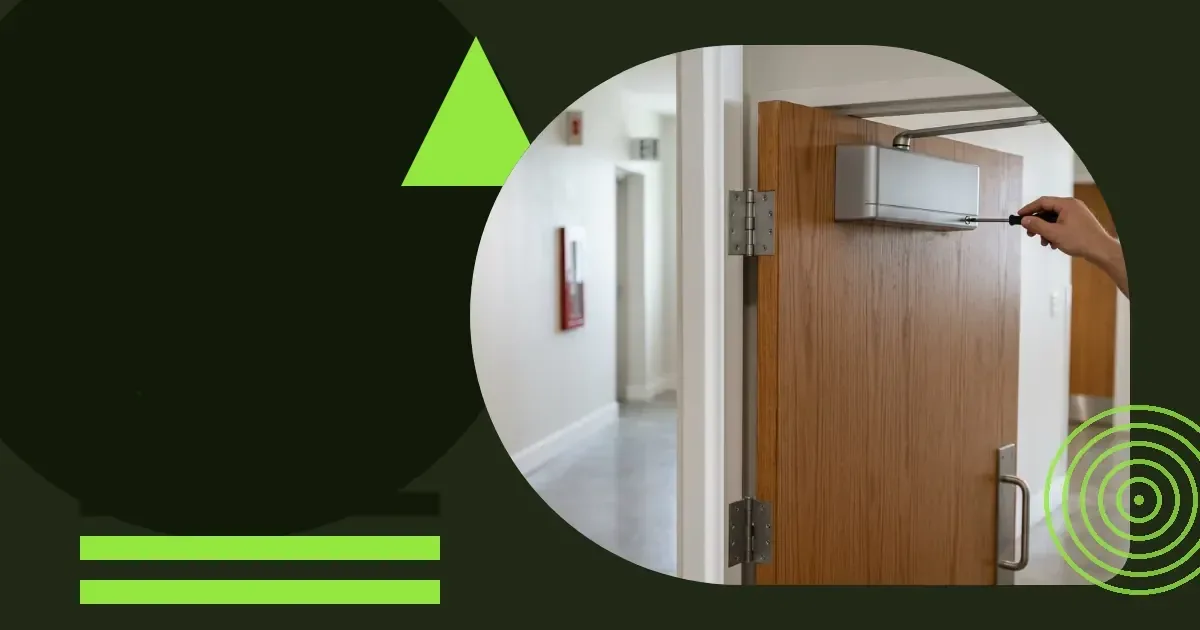
Most fire doors use an overhead closer mounted on the frame or the door leaf itself. The body of the closer holds two or three adjustment valves, usually recessed screws marked with letters or symbols. Closing speed controls how fast the door moves through most of its arc, whilst latching speed governs the final push that engages the latch. A third valve, where fitted, adjusts the backcheck resistance that stops the door swinging too hard when opened.
Turn each valve no more than a quarter turn at a time, then test the door. Over-adjustment can prevent the door from latching at all, which defeats the purpose of a fire door. Keep a small flathead or Allen key to hand, depending on the closer model.
Slow the latching speed to reduce impact noise
The slam you hear happens in the last few centimetres of travel, when the door accelerates into the frame. Latching speed is the valve that controls this phase. Turn it clockwise in small increments to slow the final swing. The door should still close firmly enough to compress the intumescent strip and engage the latch without bouncing back.
Test the door from different angles. A door that closes silently when pushed gently but still slams when released from fully open may need the main closing speed reduced as well. Both valves work together, and latching speed alone will not solve the problem if the door arrives at the frame too quickly.
Adjust the main closing speed for a smoother arc
Closing speed determines how fast the door travels from open to nearly shut. Slowing this phase reduces the momentum that drives the slam. Turn the closing-speed valve clockwise by a quarter turn, then open the door fully and let it go. The door should swing shut in a steady, controlled motion, taking longer than before but never stalling halfway.
If the door stops short of latching, you have slowed it too much. Turn the valve anticlockwise slightly until the door latches every time. Fire doors must self-close reliably, and a door that needs a push to latch has lost its function.
Check the backcheck setting if the door swings violently
Backcheck limits how far and how fast a door can be thrown open. A door that bangs against the wall when opened will build up speed on the return swing, making the slam worse. If your closer has a third valve marked for backcheck, turn it clockwise to increase resistance. The door will slow as it approaches its fully open position, which reduces the force available for the closing swing.
Not every closer includes this adjustment. Where it is absent, a floor- or wall-mounted stop can serve the same purpose by limiting how far the door travels.
Follow these four steps to adjust your fire door closer safely
- Identify the latching-speed valve on the closer body and turn it clockwise by a quarter turn.
- Test the door from fully open to confirm it still latches securely without bouncing.
- Adjust the main closing-speed valve clockwise by a quarter turn if the door still slams.
- Check that the door closes smoothly and latches every time, from any starting position.
Make one adjustment at a time and test between changes. Turning multiple valves at once makes it difficult to identify which setting caused a problem. If the door fails to latch after adjustment, return each valve to its starting position and begin again with smaller increments.
Compare your options for reducing fire door noise
| Method | What it changes | When to use it |
|---|---|---|
| Latching speed | Final swing into the frame | Slam happens only at the last moment |
| Closing speed | Main arc of travel | Door arrives at the frame too quickly |
| Backcheck | Resistance when opened | Door swings violently or hits the wall |
| Replacement closer | Entire mechanism | Valves have no effect or the closer leaks |
Recognise when the closer needs replacing
A closer that no longer responds to adjustment, leaks hydraulic fluid or has visibly damaged valves should be replaced rather than adjusted further. Fire door closers are subject to British Standards, and a faulty closer compromises the door's ability to contain smoke and flame. Choose a replacement rated for the door's weight and fire rating, and ensure it is installed by someone familiar with the requirements.
Worn intumescent strips or a misaligned frame can also cause noise that adjustment cannot fix. Inspect the strips around the door edge and replace them if they are compressed, torn or missing in places. A door that has dropped on its hinges may need packing washers behind the hinge plates to restore alignment. For guidance on other fire door hardware, see how to choose handles for a fire door and what a drop seal does.
Balance noise reduction with fire safety requirements
A fire door must close and latch from any open position without assistance. Adjusting the closer to eliminate noise entirely can leave the door too slow to shut in an emergency, or unable to overcome resistance from air pressure or carpet friction. The door's primary function is containment, and a slight noise during normal use is acceptable if the alternative is a door that fails to latch.
Test the door after adjustment by opening it fully and releasing it from different points. It should latch securely every time, even when released from a few centimetres ajar. If you find yourself pushing the door to help it close, the adjustment has gone too far. Understanding when internal doors need fire rating helps you decide where adjustment is appropriate and where a different solution may be needed.
Maintain adjusted settings over time
Door closers lose hydraulic pressure as they age, and the settings you make today may drift over months of use. Check the door's closing action every few months and adjust the valves again if the slam returns. Keep a note of which direction and how far you turned each valve, so you can repeat the adjustment or reverse it if needed.
Clean the closer body and valves during routine maintenance to prevent dust and debris from affecting the mechanism. A closer that has been adjusted multiple times without improvement may have internal wear that no amount of valve adjustment can correct, and replacement becomes the only reliable solution.
Disclaimer: This article is for general information only. We do not sell any goods or services.
Download PDF: Fire Door Closer Adjustment Checklist PDF, 29 KB
Further reading
Frequently asked questions
How do I stop my fire door from slamming without breaking the rules?
Adjust the latching-speed and closing-speed valves on the door closer, turning each clockwise by small increments until the door closes quietly but still latches securely every time. The door must self-close reliably to meet fire safety requirements.
Which valve on a door closer controls the slamming noise?
The latching-speed valve controls the final swing into the frame, where most slamming noise occurs. The main closing-speed valve affects the earlier part of the swing and should be adjusted if the door arrives at the frame too quickly.
Can I make a fire door completely silent?
You can reduce the noise significantly by adjusting the closer, but a fire door must still latch firmly to compress the intumescent strip and contain smoke. A completely silent close may compromise the door's ability to latch from all positions, which is not safe.