Choosing the Right Door Closer: 4 Factors You Check First
 Save
A door closer controls how a door shuts, ensuring it closes fully without slamming. The right closer depends on the door's weight, where it sits, whether it needs fire certification and how visible you want the mechanism to be. Fred Duncombe walks you through the decisions that narrow your choice to the closer that works.
Match the closer to your door's weight
Door closers are rated by power grade, and the grade must suit the door's size and weight. A light internal door needs less force than a heavy fire-rated door with multiple seals. Most residential doors fall into the lower grades; commercial and fire doors require higher power.
Weigh the door or check its specification. Closers are marked with a power grade—typically from one to seven, with seven handling the heaviest doors. Installing a closer rated too low means the door won't latch reliably; one rated too high can slam or stress the frame.
Decide between overhead and concealed installation
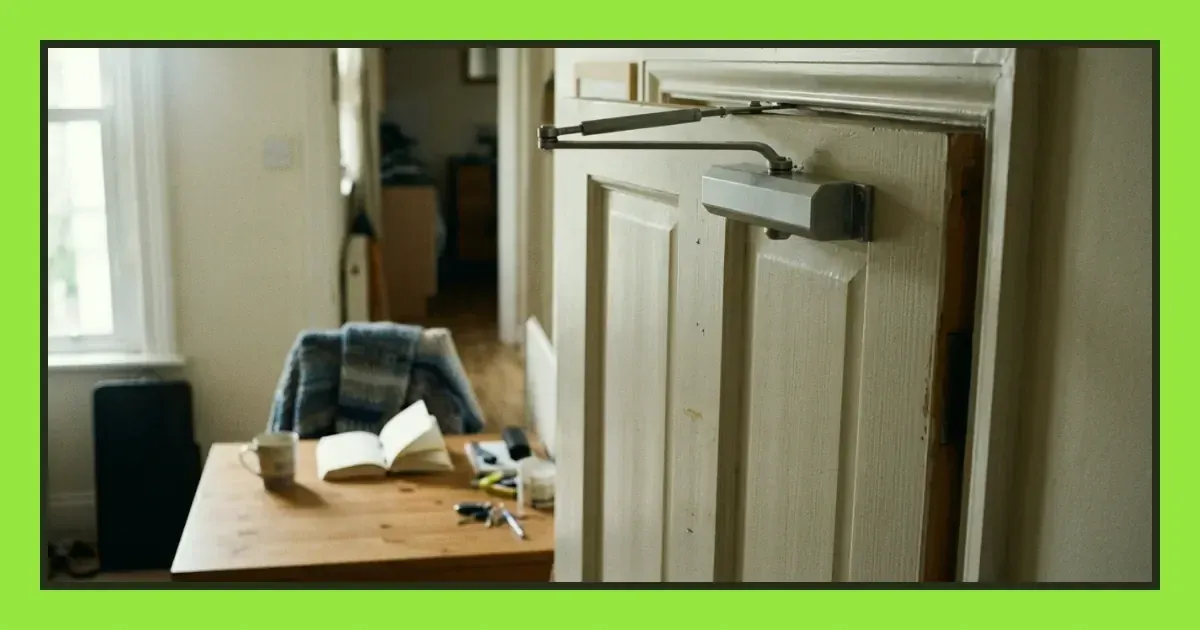
An overhead closer mounts visibly on the door or frame, whilst a concealed closer sits inside the door or frame itself. Overhead types are simpler to fit and adjust, and you can service them without disturbing the door structure. Concealed closers offer a cleaner look but require a pocket routed into the door or frame during manufacture or preparation.
Choose overhead when you retrofit an existing door or need easy access for adjustment. Choose concealed when appearance matters and the door can accommodate the mechanism without compromising its fire rating or structural integrity. Fire doors with concealed closers must carry certification for the complete assembly.
Consider fire rating and certification requirements
Fire doors must close fully to maintain compartmentation, and the closer is part of the certified assembly. If your door carries an FD30 or FD60 rating, the closer you fit must not invalidate that certification.
Check the door's certification documents for approved closers. Many fire door schedules specify compatible models by manufacturer and type. Fitting a non-approved closer voids the rating, even if the closer physically works. Where the door must close from any angle—common in escape routes—the closer needs enough power to overcome air pressure and seal compression.
Account for location and exposure
External doors face wind, temperature swings and moisture. Closers for these locations need weather-resistant finishes and sometimes enhanced power grades to cope with wind load. Internal doors in controlled environments can use lighter, less robust models.
A door that opens to the outside may need a hold-open facility during good weather, released manually or by an electromagnetic holder in the event of a fire alarm. Some closers include adjustable backcheck, which slows the door's opening phase to prevent it hitting a wall or adjacent furniture.
Understand adjustment features
Most overhead closers have valves that adjust closing speed and latching force. Typical adjustments include sweep speed—how fast the door moves through most of its arc—and latch speed, which governs the final phase to ensure the door latches without banging.
Cheaper closers offer fewer adjustment points, which limits your ability to fine-tune behaviour. If the door needs to close gently for accessibility but still latch firmly, look for a closer with separate sweep and latch controls. Delayed action is useful where people need extra time to pass through, common in corridors and accessible routes.
Follow these steps to choose your closer
- Measure the door's width, height and thickness, then weigh it or consult its specification to determine the required power grade.
- Check whether the door has fire certification and identify any approved closer models from the certification schedule.
- Decide whether you want an overhead or concealed fitting based on the door's construction and your aesthetic preference.
- Assess the door's location—internal or external, sheltered or exposed—and choose a finish and power grade that suit the conditions.
- Confirm the closer includes the adjustment features you need, such as backcheck, delayed action or separate latch control.
Compare overhead and concealed closers
| Type | Where it sits | Installation ease | Adjustment access |
|---|---|---|---|
| Overhead | Visible on door or frame | Straightforward retrofit | External valves, quick |
| Concealed | Inside door or frame | Requires routing or preparation | Limited without dismantling |
Check compatibility with existing hardware
The closer must work with the door's hinges, locks and handles. Heavy closers exert force through the hinge screws; if the frame is weak or the screws are short, the closer may pull them loose over time. Reinforcement plates or longer screws solve this.
Some locks resist the closer's force, especially multi-point locks that engage multiple points around the frame. Test that the closer can overcome the lock's resistance without straining the mechanism. If the door has a thumb turn or panic hardware, ensure the closer's latch speed allows the lock to engage smoothly.
Plan for ongoing adjustment and maintenance
Door closers drift out of adjustment as seals compress, hinges settle and weather changes. A closer that worked perfectly in summer may slam in winter when the door shrinks slightly. Good practice is to check and tweak the adjustment valves twice a year.
Overhead closers let you adjust without tools beyond a small screwdriver. Concealed closers may need partial disassembly to reach adjustment points, which makes them less forgiving if your door's behaviour changes. Where frequent adjustment is likely—on a door that sees heavy use or one exposed to variable conditions—overhead types offer better long-term convenience.
Download PDF: Door Closer Selection Checklist PDF, 27 KB
Further reading
Frequently asked questions
What are the main types of door closer?
The main types are overhead closers, which mount visibly on the door or frame, and concealed closers, which sit inside the door or frame. Overhead types are easier to install and adjust; concealed types offer a cleaner appearance but require preparation during manufacture or fitting.
How do I know what power grade my door closer needs?
The power grade depends on the door's size and weight. Measure the door and consult the closer manufacturer's chart, which matches door dimensions to recommended grades. Fire doors and heavy external doors typically need higher grades than light internal doors.
Can I fit any door closer to a fire door?
No. Fire doors must use closers approved in their certification schedule. Fitting a non-approved closer voids the door's fire rating, even if the closer physically works. Check the door's certification documents for compatible models.